Film Opening Breakdown (Extended): A Quiet Place: Part II (2020)
- rijarizwan062
- Jan 12, 2024
- 5 min read
Updated: May 17, 2024
I've never been a fan of horror movies, as expressed to my classmates, but at some point I knew this was a film I had to watch. Featuring the world's (and my personal) favorite celebrity couple, Emily Blunt and John Krasinski (also the director of this film) I began with A Quiet Place, a movie I ended up absolutely loving. A lot of people in the film world would agree when I say that most movie sequels end up being even worse than the originals, but this one definitely wasn't, in fact it's one of my favorite sequels. So here's my analysis on:
A Quiet Place: Part II
Director: John Krasinski
Cast: Emily Blunt, John Krasinski, Cillian Murphy and more…
Studios: Paramount Pictures
Released: 2020
The film immediately follows the first film, where Lee and Evelyn Abbott are forced to go into hiding and survive in a post-apocalyptic world, a muted dystopia where monsters sensitive to sound attack and kill, which they did to the couple's youngest child. During the course of the film they have to avoid these monsters; making a sound can lead to instant death. The movie ends with Lee dead, Evelyn having another baby, and the remaining family seeking shelter somewhere new. So, let's get into the details...


The opening is a cold open; the establishing shot is a fade-in Wide Shot of a suburban town, and for watchers familiar with the previous installment, there are several stark contrasts made between the film’s and the previous one’s openings, which also showed shots of town, but abandoned and desolate. High-key lighting with realistic colors and diegetic sounds were used to make the town look completely normal, contrary to what the audience would expect. A low angle shot is then used to introduce us to Lee Abbott, making him look heroic and powerful. As he closes his car door the shot cuts to a black screen, with a fade in of the text “Day 1” appearing. This leaves the audience with a sense of impending danger.


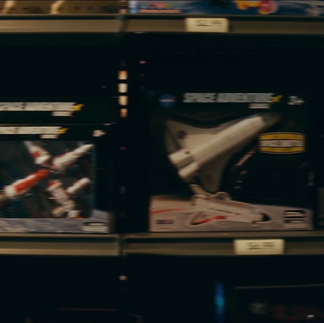


There’s tracking shots and push-ins of Lee walking in the grocery store – one shot in particular that stands out is one where Lee walks in an aisle where the shot slows down slightly to draw attention to the toy airplane in the shelf. This is a reference to the first film, in which that plane becomes the reason for Lee’s youngest son’s eventual demise. As he goes to the cashier, pull focus is applied, switching the attention from him to the owner of the store as they converse. Lee then checks his watch to leave, and the expression on his face as well as his haste throughout this small sequence leaves the audience assuming he’d be occupied with something serious, but they soon realize he’s only going to his son’s baseball game creating a false sense of security.

A tracking shot follows him on the sidewalk briskly walking to reach the game. During this shot one realizes that if there’s not much action on screen, your next focus would shift to other elements like sound, a feeling Krasinski creates impeccably. The focus is on Diegetic ambient sounds like birds chirping, Lee’s footsteps, radio chatter and the dog’s panting. These sounds usually aren’t as loud as they are in the shot but have been deliberately made so, for us to draw comparisons to the previous film and to the fact that soon all these seemingly insignificant sounds will be gone too, with the main theme of the film being sound.

A sound bridge connects to the next scene of a park and baseball pitch where you see Lee and Evelyn converse in signals – this is yet again, foreshadowing what will soon happen (or in this case, what happened in the last film). This scene isn’t as important as others in the opening, but has elements like pull focus, close ups, tilts, and more. The lack of dialogue continues throughout the opening with the focus on ambient sounds, making it a realistic and normal day in the lives of the Abbott family. Even the sound directors of the film commented on this, saying how “And it's incredible to (us) how much tension there can be where there's nothing happening. It's the anticipation of what's going to happen.”


This impression then changes with the radio static/malfunctioning sounds on the benches. A dog starts to bark (an indexical sign leading audiences to expect danger) and an over-the-shoulder shot tilts, revealing a crashing ship far in the distance. There’s a zoom-in on Evelyn and Lee’s reactions, and low angle shots toward Lee further highlighting him as the main hero.

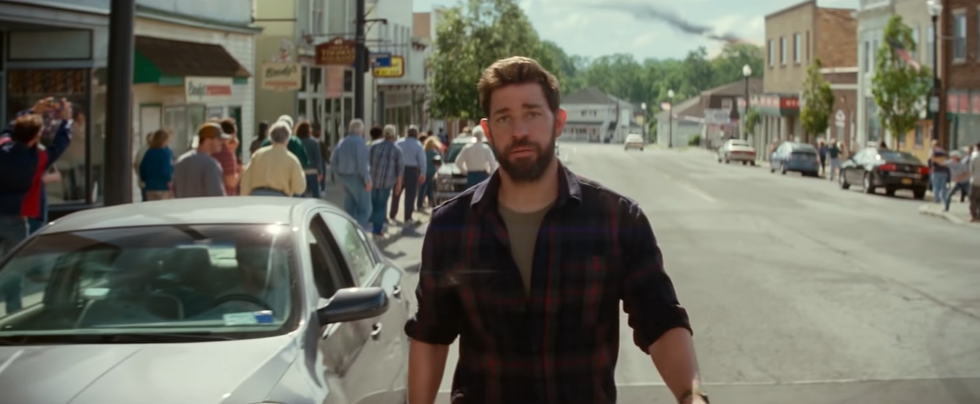

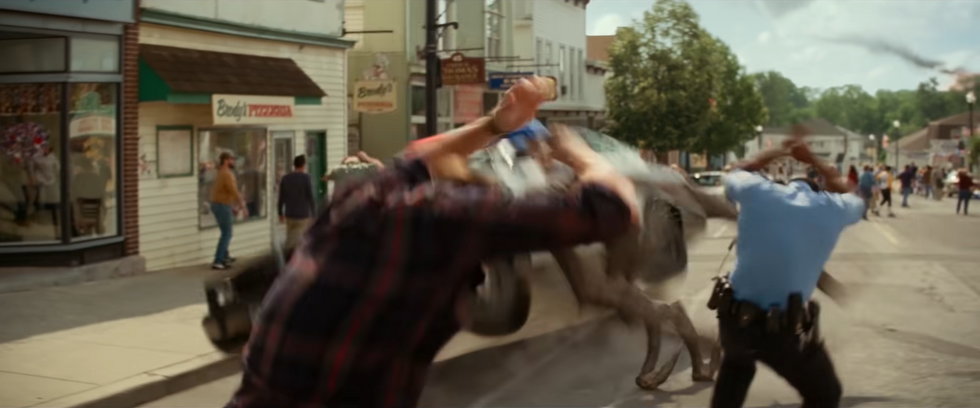
Crowd shots show the panic and confusion, and tracking shots follow Lee and his daughter Regan through town on the same path he’d come on earlier, but this time with more uneasy sounds like the townspeople’s anxious dialogues, sounds of cars and dog barking. This is a part of the film the audience expects to be investigative and confusing, where the people assess the problem, but the filmmaker brings to them what they least expect – a monster crashing into the car. It didn’t make a sound nor did people see it come, and this is where the audience gets sucked into the story. The use of long takes in the film makes the story even more real and immersive for audiences.

Lee runs back to his car in panic and tries to start it. As the shot cuts to Regan inside the car, the audience grasps a new effect: listening to the world as Regan does. She, as made clear in the first film is Lee and Evelyn’s deaf child, making the connection to the theme of sound in the franchise even richer. This technique transforms chaos and panic into complete silence that disillusions and puts the audience into a character’s shoes. It’s a sound point-of-view. We feel the confusion that Regan feels and we see Lee’s panic the way she does.


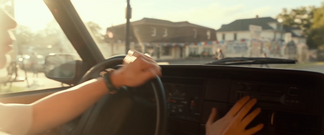

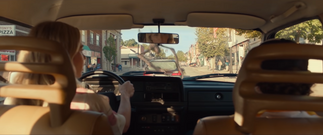


A graphic match connects the scene in Lee’s car to the scene in Evelyn’s where the long take begins. The camera pans left to show her youngest son and through over-the-shoulder POV shots, the audience is engrossed in the experience of sitting in her car and driving through traffic during the apocalypse. The framing is tight and is horizontally composed, with the dominant focus of the audience being where the camera starts to pan (Evelyn, the windshield, her son); the camera used in the film was mounted on a programmable mechanical arm which panned to each character according to the sequence. One of the best parts of this sequence is the Head-On shot of the bus coming at 40mph towards the car!

As Evelyn’s car crashes from behind, the scene cuts to Regan again, with the absence of sound (muffled) and it’s re-entry as soon as her father touches her to save her from the crowd. They run to a tavern and the panic of the townspeople is shown in a pull-back dolly shot from inside where they run in, colliding into each other, tripping and sliding under the tables for shelter. As they trip, Lee grabs onto Regan in a shot from the right protecting her from the small stampede.


The scene continues as they scoot away from the door, used to emphasize on the low-key lighting, accentuating the monsters’ silhouettes.
So here we have, yet another of my analyses, with this being one of the best. See you in the next one!
Comments