Film Opening Breakdown (Brief): Harry Potter and the Deathly Hallows: Part 1 (2010)
- rijarizwan062
- Jan 12, 2024
- 4 min read
Updated: May 17, 2024

The Harry Potter books written by J.K Rowling took the world by storm book by book beginning in 1997, with the first film in the franchise being released in 2001. The story of the characters Harry, Ron and Hermione is one of the most beloved in the world, and this particular film is one (of two) that concludes their story. It’s my personal favorite out of the whole franchise and the opening sets the tone for not just this film, but for the next installment too
Harry Potter & the Deathly Hallows Part 1
Director: David Yates
Cast: Daniel Radcliffe, Emma Watson, Rupert Grint, Tom Felton and more
Studios: Warner Bros. studios
Released: 2010
The film follows Harry, Ron and Hermione who go on a quest to destroy the Horcruxes, the sources of Voldemort’s immortality, as they prepare for the ultimate showdown to defeat him once and for all. The war begins as Voldemort’s forces take over the ministry and Hogwarts - their safe havens - and force all their mentors and allies into hiding. They must rely only on each other with the dark forces constantly on the watch for them, and find the horcruxes before Voldemort finds them in the ultimate race against time.





The previous installments usually began with the iconic Harry Potter soundtrack playing as the Warner Bros. logo appeared but with every film the opening got darker, both visually and audibly. The sound in this film’s opening plays a huge role in establishing the tone of the film and dark and mysterious. The sounds you hear are creepy whispers and screeching sounds, which get louder and faster, until they immediately stop and there’s a quick cut to an extreme close-up of a new character’s eyes. This character is immediately recognized by the audience as an authoritative figure revealed to be the Ministry of Magic – each shot shows more of him. This begins with an extreme close up of his stern eyes, then a close up of his face to focus on his political and pacifying dialogue. He directly addresses the camera as his audience, thus making his message even more powerful. This follows a quick mid shot of him from behind and finally a wide shot revealing the hundreds of cameras and reporters he is addressing.


A close up of a newspaper in the next shot provides enough context for audiences, showing them just how unstable conditions have become. As Voldemort starts to gain power, violence in the muggle world increases, which “sparks panic” within the masses prompting the speech they had just seen by the Minister of Magic. The first main character of the film – Hermione - is now revealed in a full shot of her in her bedroom troubled by the newspaper.


A high angle POV shot shows the Dursleys leaving their home for good (without Harry) fearing for their safety. The way this shot is filmed (high angle) is symbolic in many ways – Harry looking down at them from his window on the first floor is symbolic of how weak they ended up being in comparison to him. All his life they looked down on him and treated him horribly, but he ended up making his life worthwhile and risking it all to defeat Voldemort while they fled, leaving him behind.
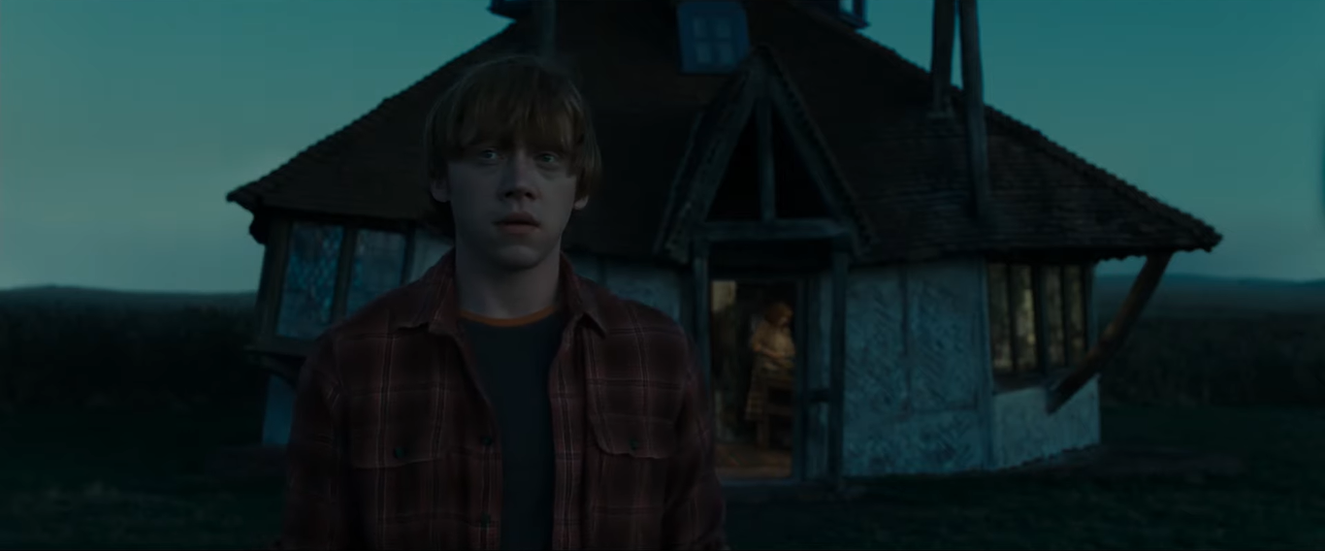
Comparing this to the mid-shot of Ron outside his home – we hear music swell up almost inspirationally, changing its effect from upsetting to adventuresome. The colors are relatively different than the others as well, showing what looks like sunset; the blue-green sky of the dusk provides a sense of calm and ease in the frame, suiting what’s happening in the shot: Ron staring into the distance with what is presumably internal dilemmas or a sense of readiness for what’s to come. The audience, with this opening, recognizes how different the three friends’ struggles really are, yet they have the same goal to move toward.

A mid-shot of Hermione and close-ups of her parents’ photos shows her erasing herself from their memories.
One of the next few shots shows Harry watching as his family leaves him:

A good use of the Rule of Thirds isolates Harry from the Dursleys preparing the audience for the journey he’ll have to go alone. As Hermione leaves her home in a tracking shot showing her walk alone in the middle of the road in a seemingly desolate town, the theme of loneliness is conveyed again. With these shots, via cross-cutting, the filmmaker not only conveys the theme of loneliness but togetherness at the same time. By showcasing all three events simultaneously he creates Binary Opposites, showing the audience that although in their own muggle towns and homes they are alone, they never really will be because they have each other – all working towards the same eventual goal together.


Once this idea is established, and the audience buckles up along with them, the film begins with the fade in of the iconic Harry Potter title card.
So that's my Brief Breakdown on Harry Potter and the Deathly Hallows Part 1. See you in the next one!


Comments